LG UAE savings guide: total cost for Value seekers — planned purchase
A UAE LG buying guide for a planned purchase, tailored to a value seeker and focused on total cost, final price and responsible coupon use without unverified claims.


How this guide was produced
This guide was created and assembled by a structured automated content system, then checked by automated quality gates for structure, links, sources and claims. Automation is not presented as first-hand product testing; changing information requires a reliable source or retailer-checkout verification.
Read content production methodologyShort answer
If your goal is to save on LG, start with a final-price ceiling that fits a value seeker rather than a discount percentage, then test code TAR99 and include delivery and fees.
- Search intent: smart savings; it should shape the LG decision rather than repeat keywords.
- value seeker rule: compares usefulness per unit of spend rather than discount percentage alone.
- total cost rule: calculate the price after coupon, delivery and fees instead of comparing the advertised price only.
- planned purchase constraint: you have time to compare and can reject any deal that does not meet your conditions.
- Coupon TAR99: available to try only; the current retailer-cart result is the final reference.
Quick facts for comparison
| Market | United Arab Emirates |
|---|---|
| Local currency | UAE dirham (AED) |
| Entity | LG |
| Entity type | brand |
| Search intent | smart savings |
| Shopper profile | value seeker |
| Comparison angle | total cost |
| Purchase context | planned purchase |
| Shopper-priority rule | compares usefulness per unit of spend rather than discount percentage alone |
| Comparison-angle rule | calculate the price after coupon, delivery and fees instead of comparing the advertised price only |
| Purchase-context constraint | you have time to compare and can reject any deal that does not meet your conditions |
| Coupon shown to try | TAR99 |
| Coupon status | Available to try — not tested for this product/brand |
| Discount percentage | Not documented |
| Expiry date | Not documented |
| Final reference | Current retailer checkout |
Quick decision matrix
| Criterion | Page-specific rule | Practical decision |
|---|---|---|
| value seeker priority | compares usefulness per unit of spend rather than discount percentage alone | Reject an option that breaks the value seeker priority even when its headline price is lower. |
| total cost angle | calculate the price after coupon, delivery and fees instead of comparing the advertised price only | Use total cost as the same test for every alternative. |
| planned purchase context | you have time to compare and can reject any deal that does not meet your conditions | Change timing or alternative before changing the core need. |
| Entity type | brand | Check seller and warranty inside LG listings. |
| Search intent | smart savings | Do not let the promotion raise the spending ceiling you set. |
| Coupon evidence | Available to try with no assumed percentage or eligibility | Use only the current retailer-cart result as the final reference |
Evidence and transparency ledger
| Information | Status | What it means |
|---|---|---|
| Market and currency | Bound in the offer source | United Arab Emirates · AED |
| Entity and search intent | Documented in the article | The guide identifies the product/brand/category and comparison purpose |
| value seeker evidence | Article-specific decision rule | compares usefulness per unit of spend rather than discount percentage alone |
| total cost evidence | Article-specific comparison rule | calculate the price after coupon, delivery and fees instead of comparing the advertised price only |
| planned purchase evidence | Article-specific decision constraint | you have time to compare and can reject any deal that does not meet your conditions |
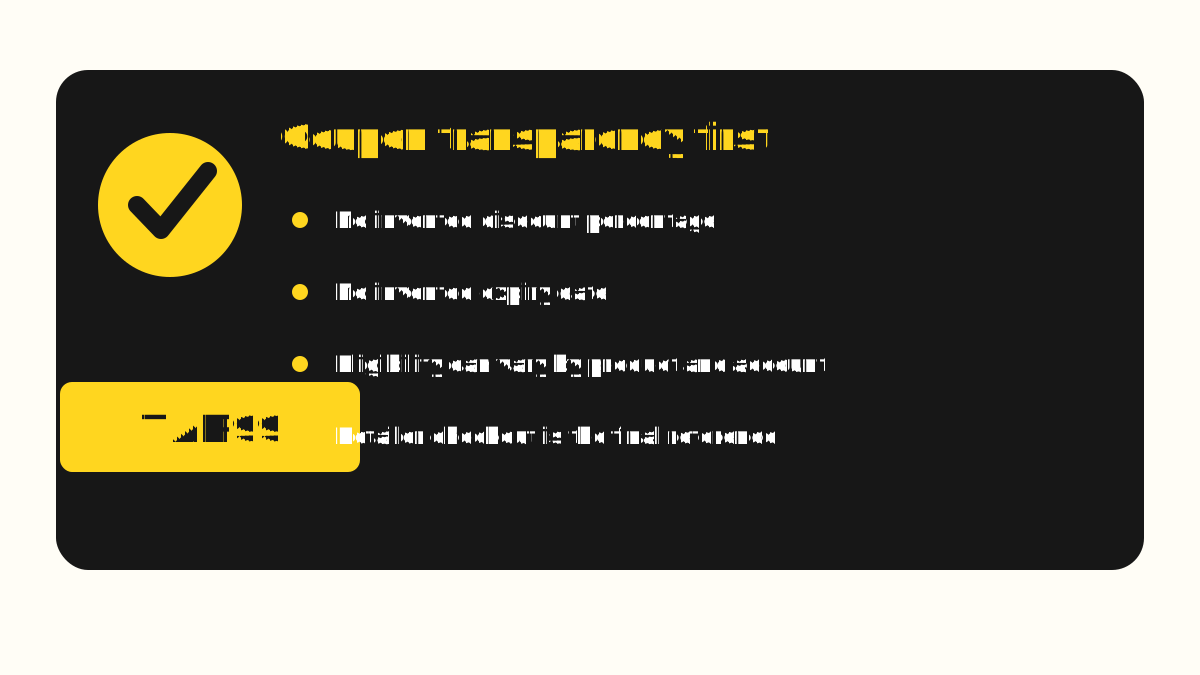
| Coupon TAR99 | Available to try · not tested | Showing the code does not prove eligibility for this item or account |
| Discount percentage | Unknown | No estimated or invented percentage is generated |
| Expiry date | Unknown | No expiry date is generated without evidence |
| Minimum spend and exclusions | Unknown | These fields remain empty until supported by documented campaign terms |
| Test result | Not tested | No hands-on test or success claim is made without an actual test record |
| Eligibility result | Retailer-dependent | The current checkout message is the final reference |
Pre-checkout checklist
- value seeker: compares usefulness per unit of spend rather than discount percentage alone. Turn this priority into a clear exclusion rule before opening the cart.
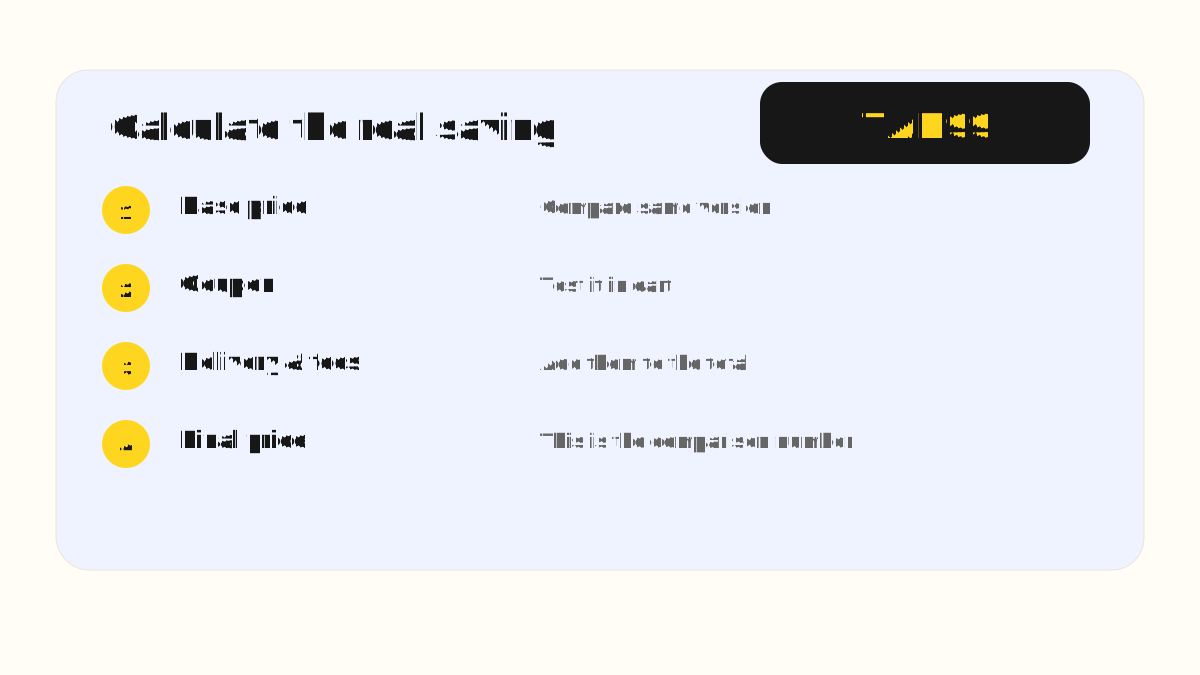
- total cost: calculate the price after coupon, delivery and fees instead of comparing the advertised price only. Apply it consistently to every option and record the result.
- planned purchase: you have time to compare and can reject any deal that does not meet your conditions. Set timing and maximum final cost before testing the coupon.
- Separate the LG brand from seller, warranty and fulfilment before choosing.
- Fix the spending ceiling before promotions and do not add items merely to reach a discount.
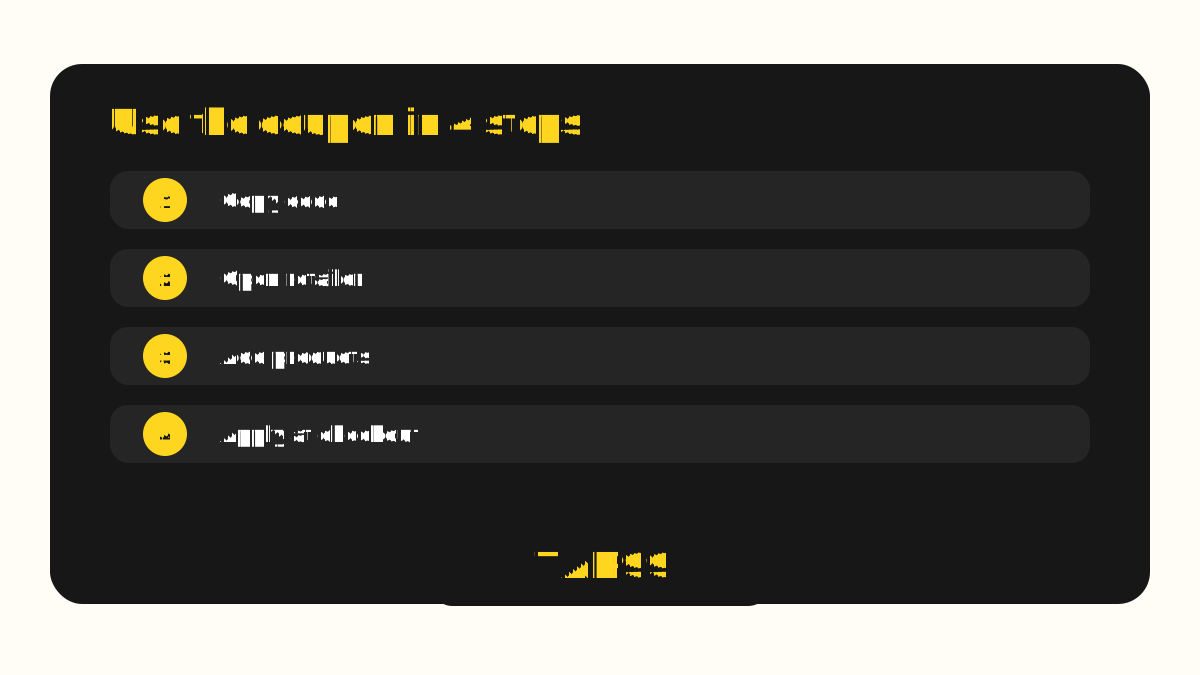
- Treat the retailer cart message as the final reference for coupon eligibility and final price before payment.
A quick LG decision: value seeker × total cost
A UAE LG buying guide for a planned purchase, tailored to a value seeker and focused on total cost, final price and responsible coupon use without unverified claims. The starting rule for this shopper is: compares usefulness per unit of spend rather than discount percentage alone. Do not move to coupon comparison until an option passes that rule, because a lower headline price does not compensate for an item, seller or timing choice that does not fit a value seeker.
The decision angle is total cost: calculate the price after coupon, delivery and fees instead of comparing the advertised price only. The context is planned purchase: you have time to compare and can reject any deal that does not meet your conditions. Combine both rules in one comparison, then test the coupon only after defining the suitable alternative and maximum final cost.
Set a LG budget before using a coupon
For a smart-savings search, set the spending ceiling before opening promotional pages. Split the budget into the product price, expected delivery or fees, and only a small buffer for something genuinely necessary. A coupon should improve a purchase you already intended to make, not raise the amount you are willing to spend. If the code encourages extra items or does not materially improve the checkout total, the promotion may have little practical value despite an attractive headline.
Use a “maximum acceptable total” for LG. Write down the highest final amount you are comfortable paying, then judge each retailer after shipping and fees against that number. This keeps the discount in its proper role: reducing cost rather than justifying extra spending. If the basket moves above your ceiling at checkout, step back instead of trying to rescue the purchase with unnecessary add-ons or repeated coupon experiments.
Separate the LG brand from the seller
Seeing the LG name does not mean every listing is an official brand page or that every seller offers the same conditions. On multi-seller marketplaces, review seller identity, warranty, fulfilment and returns. KhasmGate is independent of brands and retailers; brand pages organise search intent and connect relevant categories and products, not claim an official relationship or exclusive coupon.
If authenticity or official warranty matters to you, put that requirement ahead of a small price difference. A sound comparison balances final price with product source and expected after-sales support. A coupon should not be the only reason to choose one seller over another.

value seeker: a distinct workflow for this shopper
Divide price by expected usefulness instead of chasing the lowest number. Compare what you will actually use, expected life and accessory or maintenance costs, then remove features that raise price without a clear improvement for your need.
value seeker: the first filter for LG
compares usefulness per unit of spend rather than discount percentage alone. In a planned purchase scenario, do not start with the coupon; turn this priority into an accept-or-reject rule, then use total cost only among options that pass it. The decision therefore stays appropriate for a value seeker even when the promotion changes.
total cost: a test for a value seeker
calculate the price after coupon, delivery and fees instead of comparing the advertised price only. Apply this test to LG while keeping the shopper rule in view: compares usefulness per unit of spend rather than discount percentage alone. If an offer improves the headline price but breaks that priority, record why it leaves the shortlist instead of changing the standard because a discount appeared.
planned purchase: timing and budget constraint
you have time to compare and can reject any deal that does not meet your conditions. Connect that constraint to the value seeker priority: compares usefulness per unit of spend rather than discount percentage alone. Timing and maximum final cost then become part of the comparison rather than a separate pressure that pushes the shopper toward a less suitable alternative.
When total cost conflicts with the value seeker need
This brand page is built around smart savings. An option may look strong from the total cost angle but still be weaker for a value seeker. For LG, apply this rule: calculate the price after coupon, delivery and fees instead of comparing the advertised price only and then test the result against the shopper priority: compares usefulness per unit of spend rather than discount percentage alone.
A practical alternative in a planned purchase scenario
If the first option fails, do not automatically raise the budget. you have time to compare and can reject any deal that does not meet your conditions. Keep an alternative that preserves the value seeker need and passes the same total cost test. This prevents the coupon or time pressure from turning the comparison into a different purchase.
Test the decision without a coupon
Before payment, ask whether LG still suits a value seeker if the code fails: compares usefulness per unit of spend rather than discount percentage alone. Then review total cost: calculate the price after coupon, delivery and fees instead of comparing the advertised price only. Finally apply the planned purchase constraint: you have time to compare and can reject any deal that does not meet your conditions. If the decision still makes sense after all three checks, the coupon is a potential improvement rather than the reason to buy.
Decision boundaries specific to a value seeker
This audience is not just a label in the article: compares usefulness per unit of spend rather than discount percentage alone. Turn that priority into three practical boundaries before comparing LG: an outcome the purchase must deliver, a final-cost ceiling and one condition you will not trade away. Reject an offer that breaks one of those boundaries even when its discount looks large.
Once the shortlist is defined, apply the total cost test only inside those boundaries. The guide therefore reflects the needs of a value seeker instead of recycling one purchase decision for every shopper, while the planned purchase scenario remains a constraint rather than a reason to change the original need.
When should a value seeker decide not to buy?
A no-purchase decision can be as useful as a purchase. For a value seeker, reject the deal when it fails this priority: compares usefulness per unit of spend rather than discount percentage alone. Treat calculate the price after coupon, delivery and fees instead of comparing the advertised price only as an additional test, not a substitute for that need. If the basket requires a higher budget or worse condition just to make the coupon work, the apparent saving does not serve the goal.
In a planned purchase context, use a clear exit rule: if no option meets the need, cost ceiling and acceptable terms, keep the comparison and wait or change the alternative. That prevents promotion pressure from turning a smart savings guide into an unsuitable purchase.
An independent decision log for LG: from need to rejection
Start this version of the guide with a short decision log for a value seeker: compares usefulness per unit of spend rather than discount percentage alone. Keep only two or three candidates and write a concrete reason to keep or reject each one. “Cheaper” is not enough; connect the decision to the real job, product fit, seller, terms and final payable total. The comparison can then be reviewed even if the coupon changes later.
Next apply the total cost lens: calculate the price after coupon, delivery and fees instead of comparing the advertised price only. If checkout changes the ranking, record exactly what changed instead of restarting the comparison. In a planned purchase situation — you have time to compare and can reject any deal that does not meet your conditions — keep an explicit exit rule: when no option meets both the need and final-cost ceiling, waiting or changing the alternative is a valid result rather than a failure to find a discount.
A four-point pre-payment test for a value seeker
Before paying for LG, check four separate items: whether the exact variant still matches the comparison, whether seller, delivery and return terms remain acceptable, whether the final total after code and fees stays inside the ceiling, and whether the item still serves the value seeker priority. Keep these checks separate from promotional wording so an offer cannot pass the price test while the purchase fails the use-case test.
If the code fails, do not automatically change the product just to make a promotion work. Return to the original selection reason, then reapply the total cost criterion to the alternatives. This creates information gain beyond a repeated tips template by turning the value seeker need and planned purchase constraint into concrete accept-or-reject steps.
Check delivery, returns and warranty
A low product price is not automatically a good deal if returning the item is expensive or the policy is unclear. For LG, review the delivery window, tracking, return period, return cost and the condition required for a return. For electronics or higher-value goods, check warranty coverage and who provides after-sales support. These details can matter more than a small price difference when a product may need testing, replacement or service.
On a marketplace with multiple sellers, seller-level policies can differ from the platform's general policy. Check the seller name, available reputation signals, fulfilment information and warranty details. A global brand name appearing on a page does not mean KhasmGate is an official brand site. We are independent and use brand, category and product pages to organise shopping information and coupon discovery.
How this guide was produced
This guide is produced with automation from structured data and fixed editorial rules, then passes quality checks for unsupported claims, duplication and broken links before it can enter the sitemap. Automation does not mean the coupon was hands-on tested; verification status and sources are shown separately on the page.
Editorial policy · Verification methodology · Editorial team
Sources and methodology
Frequently asked questions
Is there a guaranteed LG coupon in the UAE?
We do not claim a guaranteed LG coupon without actual verification and documented terms. Try available codes and confirm the result in the retailer cart.
How do I use a coupon without overspending on LG?
Set the maximum final total before viewing promotions, then treat the coupon as a way to reduce an intended purchase rather than a reason to add unnecessary items.
Do all LG sellers offer the same terms?
No. Delivery, warranty, returns and eligibility can differ by seller, so review the current listing before relying on any promotion.
What matters most to a value seeker buying LG?
compares usefulness per unit of spend rather than discount percentage alone. Turn that priority into a clear decision rule before comparing the promotion or coupon.
How should I apply total cost when comparing LG?
calculate the price after coupon, delivery and fees instead of comparing the advertised price only. Apply this criterion the same way to every option and record the result before moving to the next offer.
What changes in a planned purchase scenario?
you have time to compare and can reject any deal that does not meet your conditions. Use that constraint to decide whether timing, budget and the alternative are suitable before testing the coupon.
What sources support the shopping guidance in this article?
We link to the KhasmGate verification methodology and official consumer-protection guidance for the relevant market, while clearly separating documented facts from codes that are only available to try.
Useful next steps
More LG guides

LG UAE checkout guide: total cost for Replacement buyers — planned purchase

LG UAE final-price guide: total cost for Value seekers — planned purchase

When to buy LG in UAE: total cost for Replacement buyers — planned purchase

When to buy LG in UAE: total cost for Value seekers — planned purchase

men's fashion UAE — Save: Cost · Value · Planned