school supplies: when to buy — Specs for Premium — Planned
A UAE school supplies buying guide for a planned purchase, tailored to a premium buyer and focused on specifications, final price and responsible coupon use without unverified claims.


Short answer
The timing of a school supplies purchase should not depend on a sale-event label alone; use a reference price, your planned purchase timing, and test TAR93 before deciding.
- Search intent: shopping timing; it should shape the school supplies decision rather than repeat keywords.
- premium buyer rule: balances quality with final price instead of automatically choosing the cheapest option.
- specifications rule: make sure the comparison uses the same version, size, capacity and condition.
- planned purchase constraint: you have time to compare and can reject any deal that does not meet your conditions.
- Coupon TAR93: available to try only; the current retailer-cart result is the final reference.
Quick facts for comparison
| Market | United Arab Emirates |
|---|---|
| Local currency | UAE dirham (AED) |
| Entity | school supplies |
| Entity type | category |
| Search intent | shopping timing |
| Shopper profile | premium buyer |
| Comparison angle | specifications |
| Purchase context | planned purchase |
| Shopper-priority rule | balances quality with final price instead of automatically choosing the cheapest option |
| Comparison-angle rule | make sure the comparison uses the same version, size, capacity and condition |
| Purchase-context constraint | you have time to compare and can reject any deal that does not meet your conditions |
| Coupon shown to try | TAR93 |
| Coupon status | Available to try — not tested for this product/brand |
| Discount percentage | Not documented |
| Expiry date | Not documented |
| Final reference | Current retailer checkout |
Quick decision matrix
| Criterion | Page-specific rule | Practical decision |
|---|---|---|
| premium buyer priority | balances quality with final price instead of automatically choosing the cheapest option | Reject an option that breaks the premium buyer priority even when its headline price is lower. |
| specifications angle | make sure the comparison uses the same version, size, capacity and condition | Use specifications as the same test for every alternative. |
| planned purchase context | you have time to compare and can reject any deal that does not meet your conditions | Change timing or alternative before changing the core need. |
| Entity type | category | Only compare school supplies options that solve the same use case. |
| Search intent | shopping timing | Buy when the reference price and real need date align. |
| Coupon evidence | Available to try with no assumed percentage or eligibility | Use only the current retailer-cart result as the final reference |
Evidence and transparency ledger
| Information | Status | What it means |
|---|---|---|
| Market and currency | Bound in the offer source | United Arab Emirates · AED |
| Entity and search intent | Documented in the article | The guide identifies the product/brand/category and comparison purpose |
| premium buyer evidence | Article-specific decision rule | balances quality with final price instead of automatically choosing the cheapest option |
| specifications evidence | Article-specific comparison rule | make sure the comparison uses the same version, size, capacity and condition |
| planned purchase evidence | Article-specific decision constraint | you have time to compare and can reject any deal that does not meet your conditions |
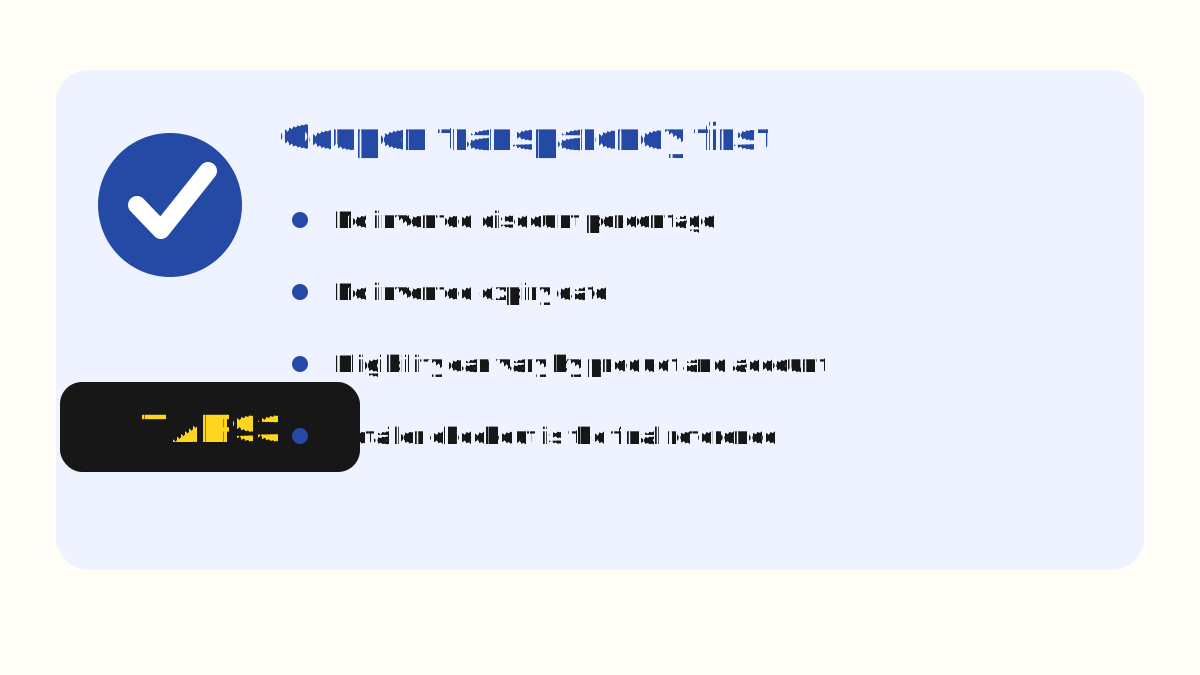
| Coupon TAR93 | Available to try · not tested | Showing the code does not prove eligibility for this item or account |
| Discount percentage | Unknown | No estimated or invented percentage is generated |
| Expiry date | Unknown | No expiry date is generated without evidence |
| Minimum spend and exclusions | Unknown | These fields remain empty until supported by documented campaign terms |
| Test result | Not tested | No hands-on test or success claim is made without an actual test record |
| Eligibility result | Retailer-dependent | The current checkout message is the final reference |
Pre-checkout checklist
- premium buyer: balances quality with final price instead of automatically choosing the cheapest option. Turn this priority into a clear exclusion rule before opening the cart.
- specifications: make sure the comparison uses the same version, size, capacity and condition. Apply it consistently to every option and record the result.
- planned purchase: you have time to compare and can reject any deal that does not meet your conditions. Set timing and maximum final cost before testing the coupon.
- Shortlist school supplies options by use case before ranking prices.
- Record a reference price and real need date before deciding to wait or buy.
- Treat the retailer cart message as the final reference for coupon eligibility and final price before payment.
A quick school supplies decision: premium buyer × specifications
A UAE school supplies buying guide for a planned purchase, tailored to a premium buyer and focused on specifications, final price and responsible coupon use without unverified claims. The starting rule for this shopper is: balances quality with final price instead of automatically choosing the cheapest option. Do not move to coupon comparison until an option passes that rule, because a lower headline price does not compensate for an item, seller or timing choice that does not fit a premium buyer.
The decision angle is specifications: make sure the comparison uses the same version, size, capacity and condition. The context is planned purchase: you have time to compare and can reject any deal that does not meet your conditions. Combine both rules in one comparison, then test the coupon only after defining the suitable alternative and maximum final cost.
Track a school supplies reference price instead of chasing every promotion
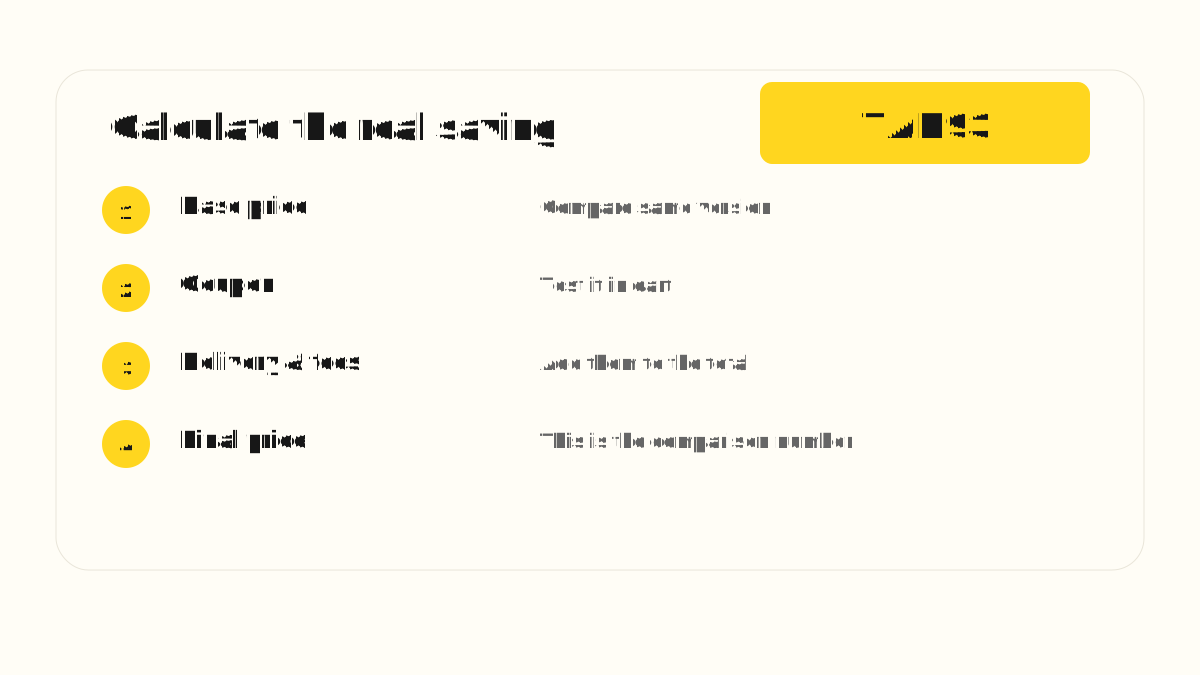
For timing-focused shopping, create a reference price rather than relying on memory. Record today's final checkout total for the same configuration and compare later offers against that baseline. You do not need constant monitoring; a simple reference range is enough to decide whether a current offer is reasonable for your budget. This is more reliable than assuming a particular sale event or calendar date will always produce the lowest price.
Also define your “need window”: when do you actually need school supplies? If the purchase can wait, you can hold out until the final total reaches your acceptable range. If the need is close, the cost of waiting and the risk of stock changes become part of the decision. Good timing is a balance of price, need, availability, delivery and clear terms rather than a guaranteed magic date.
Compare use cases inside the school supplies category
A broad category can contain products designed for different needs, so begin with the use case rather than the most visible item. Define the features that matter to you and create a short list of options that actually satisfy them. This prevents comparison between products that do different jobs or paying extra for features you will not use.
Once the short list is defined, compare final price, coupon result, delivery and returns. The discount then improves a set of already suitable choices instead of becoming the first selection criterion. If none of the options fit, expand the category or revisit alternatives rather than dropping an essential requirement merely because a promotion exists.
premium buyer: the first filter for school supplies
balances quality with final price instead of automatically choosing the cheapest option. In a planned purchase scenario, do not start with the coupon; turn this priority into an accept-or-reject rule, then use specifications only among options that pass it. The decision therefore stays appropriate for a premium buyer even when the promotion changes.

specifications: a test for a premium buyer
make sure the comparison uses the same version, size, capacity and condition. Apply this test to school supplies while keeping the shopper rule in view: balances quality with final price instead of automatically choosing the cheapest option. If an offer improves the headline price but breaks that priority, record why it leaves the shortlist instead of changing the standard because a discount appeared.
planned purchase: timing and budget constraint
you have time to compare and can reject any deal that does not meet your conditions. Connect that constraint to the premium buyer priority: balances quality with final price instead of automatically choosing the cheapest option. Timing and maximum final cost then become part of the comparison rather than a separate pressure that pushes the shopper toward a less suitable alternative.
When specifications conflicts with the premium buyer need
This category page is built around shopping timing. An option may look strong from the specifications angle but still be weaker for a premium buyer. For school supplies, apply this rule: make sure the comparison uses the same version, size, capacity and condition and then test the result against the shopper priority: balances quality with final price instead of automatically choosing the cheapest option.
A practical alternative in a planned purchase scenario
If the first option fails, do not automatically raise the budget. you have time to compare and can reject any deal that does not meet your conditions. Keep an alternative that preserves the premium buyer need and passes the same specifications test. This prevents the coupon or time pressure from turning the comparison into a different purchase.
Test the decision without a coupon
Before payment, ask whether school supplies still suits a premium buyer if the code fails: balances quality with final price instead of automatically choosing the cheapest option. Then review specifications: make sure the comparison uses the same version, size, capacity and condition. Finally apply the planned purchase constraint: you have time to compare and can reject any deal that does not meet your conditions. If the decision still makes sense after all three checks, the coupon is a potential improvement rather than the reason to buy.
Common mistakes that reduce the value of a deal
Frequent mistakes include comparing different storage sizes or specifications, forgetting delivery costs, overlooking seller exclusions, or increasing the basket purely to reach a discount threshold. Shoppers also focus on percentage savings while ignoring that another retailer may start with a lower base price. Return to the same rule: compare the final total for the same product and conditions before deciding.
Another mistake is treating an old screenshot or outdated page as proof that a code still works. Retailer conditions change. KhasmGate therefore shows review dates and separates available-to-try codes from information that has a real verification result. If your cart conflicts with what a page says, the retailer's current checkout is the final reference, and you can contact us to request a correction.
How this guide was produced
This guide is produced with automation from structured data and fixed editorial rules, then passes quality checks for unsupported claims, duplication and broken links before it can enter the sitemap. Automation does not mean the coupon was hands-on tested; verification status and sources are shown separately on the page.
Editorial policy · Verification methodology · Editorial team
Sources and methodology
Frequently asked questions
Is there a guaranteed school supplies coupon in the UAE?
We do not claim a guaranteed school supplies coupon without actual verification and documented terms. Try available codes and confirm the result in the retailer cart.
When is a sensible time to buy school supplies?
Use a reference price and your real need date rather than assuming a particular sale event will always be the cheapest.
How should I shortlist items in the school supplies category before trying a coupon?
Define the use case and required features first, then shortlist suitable items before comparing final price and coupons.
What matters most to a premium buyer buying school supplies?
balances quality with final price instead of automatically choosing the cheapest option. Turn that priority into a clear decision rule before comparing the promotion or coupon.
How should I apply specifications when comparing school supplies?
make sure the comparison uses the same version, size, capacity and condition. Apply this criterion the same way to every option and record the result before moving to the next offer.
What changes in a planned purchase scenario?
you have time to compare and can reject any deal that does not meet your conditions. Use that constraint to decide whether timing, budget and the alternative are suitable before testing the coupon.
What sources support the shopping guidance in this article?
We link to the KhasmGate verification methodology and official consumer-protection guidance for the relevant market, while clearly separating documented facts from codes that are only available to try.
Useful next steps
More school supplies guides

school supplies: final price and Specs for Premium — Planned

school supplies: checkout check — Specs for Premium — Planned

school supplies: save smarter with Specs for Premium — Planned

school supplies: save smarter with Specs for Family — Planned

school supplies: checkout check — Specs for Budget — Planned